

Building settlement is one of the most common structural problems in Quebec. When the soil shifts unevenly beneath the foundations, the entire structure undergoes movements that can compromise the integrity of your property. The clay soils that dominate the greater Montreal area, combined with extreme freeze-thaw cycles, create conditions that make this phenomenon especially likely.
The good news: detecting the signs of settlement early helps you avoid major and costly corrective work. Whether you own a residential home, manage a commercial building or oversee industrial facilities in Montreal, Laval, Longueuil, Blainville or Mirabel, this guide will help you spot the symptoms before they become critical.
In brief
Five signs should alert you to possible foundation settlement:
- cracks in the walls (especially diagonal, stair-step cracks);
- doors and windows that stick;
- uneven or sloping floors;
- gaps between the walls and the ceiling or floor;
- recurring water infiltration in the basement.
Only a structural engineer can confirm the exact cause. The earlier you act, the lower the repair costs.
5 signs of settlement you should never ignore
Recognizing the signs of foundation settlement early lets you act before the damage worsens. Here are the five most telling indicators of a structural problem.
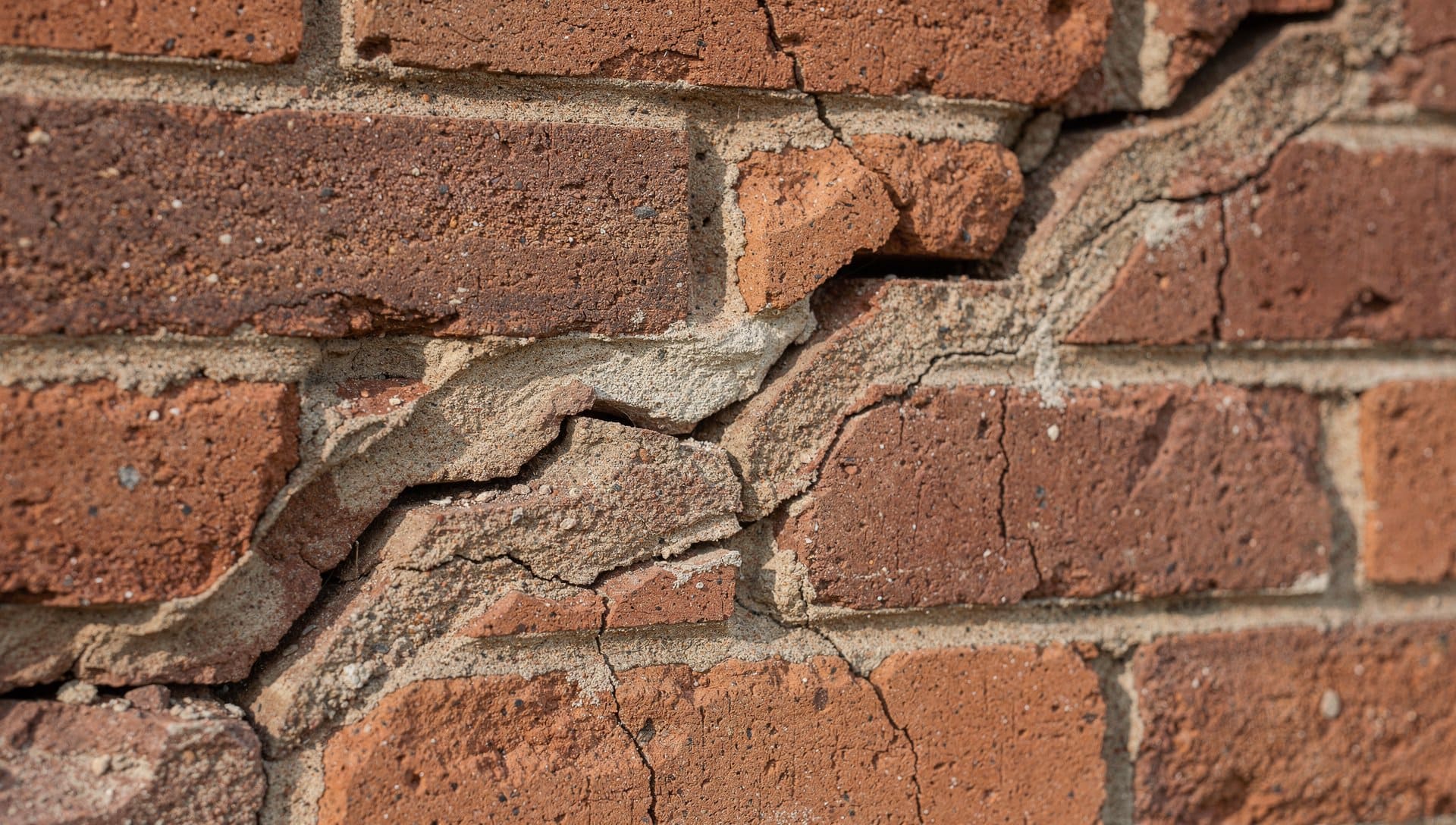
1. Cracks in interior and exterior walls
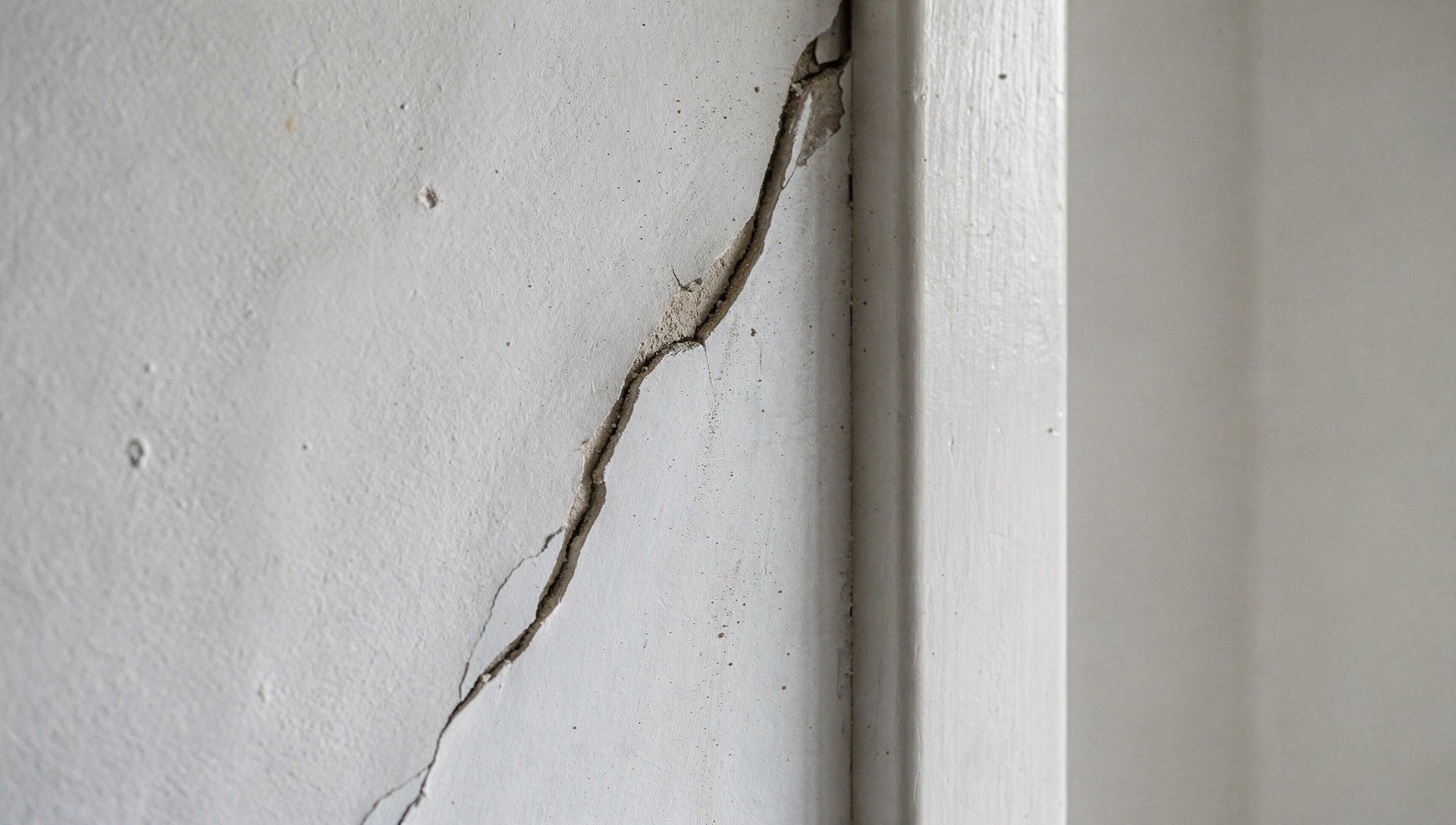
Cracks in the walls are often the first visible sign of settlement. Pay particular attention to the following types:
- Diagonal (stair-step) cracks: typical of foundation movement;
- Horizontal cracks: may indicate lateral pressure from the soil;
- Vertical cracks: often located where walls meet ceilings.
Cracks wider than 3 mm (about 1/8 inch) are a warning sign. They usually appear at the corners of windows and doors, where the structure is under the most tension. To tell an ordinary shrinkage crack from active structural movement, only a structural engineer can establish the exact cause; a masonry contractor then carries out the recommended repairs.
2. Doors and windows that stick or close poorly
When your doors and windows suddenly stick, it is not always a matter of seasonal humidity. The frame deforms with the movement of the structure and prevents the openings from working properly. This sign is especially telling when several doors or windows stick at the same time in different parts of the building.
This early symptom is often overlooked by owners who blame the age of their home. It deserves a thorough inspection to rule out any foundation problem.
3. Uneven or sloping floors
A floor that slopes or has bumps points to localized or general settlement. Several clues reveal it: a marble that rolls on its own, a spirit level that confirms the tilt, or simply a feeling of instability as you walk. Settlement can also show up as a sunken concrete slab in the basement. These uneven surfaces affect everyday comfort and can reduce your property's value if left uncorrected.
4. Visible separation between walls and the ceiling or floor
Gaps or separations that appear gradually between the walls and the ceiling signal active structural movement. On the exterior facade, watch for stair-step cracking in the masonry (brick or stone), which can betray tension in the structure.
Do not confuse this with a bulging masonry wall (called a "ventre-de-boeuf" in Quebec): this bulge is not a crack and rarely results from settlement. It is most often caused by freeze-thaw cycles or by wall ties (anchors) that no longer do their job. In every case, a separation that keeps growing warrants a prompt evaluation to determine its origin.
5. Recurring water infiltration in the basement
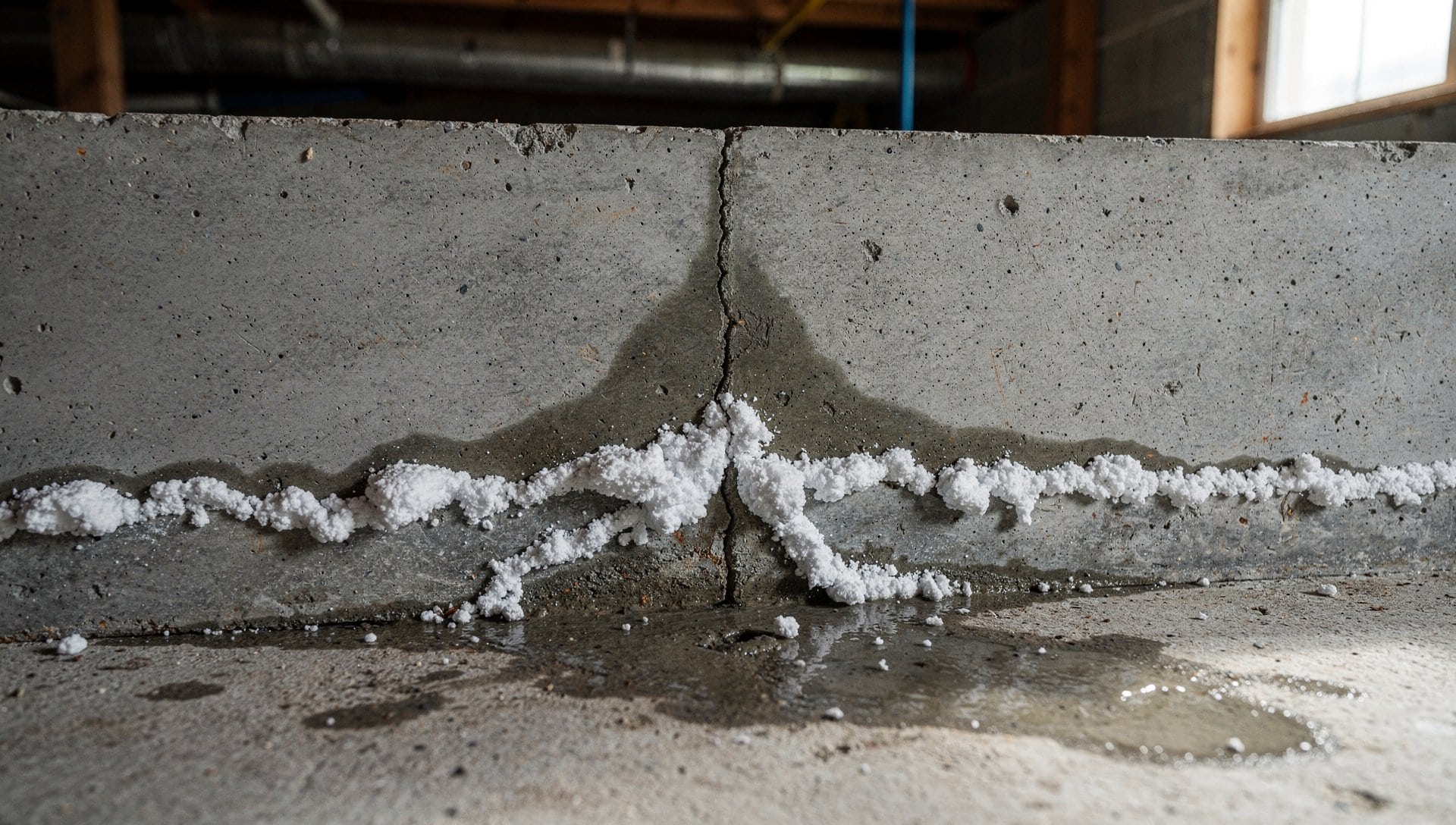
Settlement creates new paths for infiltration by changing the alignment of the foundations. Watch for moisture, stains on basement walls or efflorescence (white crystalline deposits). A musty smell is also a secondary indicator of water-related problems.
If you notice recurring water damage, the cause may be foundation settlement that compromises the building's watertightness.
Why do buildings settle in Quebec?
Understanding the causes of settlement helps you protect your property. Quebec's geology and climate pose particular challenges for foundations.
Clay soils: Quebec's geological challenge
Clay soil dominates the greater Montreal area. This type of soil holds a lot of water, compresses easily and behaves differently from season to season. In wet periods, the clay swells; in dry periods, it contracts. These repeated movements exert constant pressure on the foundations. According to the Regie du batiment du Quebec (RBQ), specific precautions are required when building on clay soil.
The impact of the freeze-thaw cycle
Quebec's climate brings extreme temperature swings that directly affect how the soil behaves. Frost lifts the ground, while thaw causes settling. This repeated stress, year after year, gradually weakens the foundations, especially in areas with unstable soil. The regions of Montreal, Laval, Longueuil, Blainville and Mirabel are particularly exposed.
Other common causes of settlement
Several other causes deserve your attention:
- Poor drainage: water pooling near the foundations and hydrostatic pressure;
- Nearby trees: roots that dry out the soil or exert pressure;
- Poorly compacted fill: mistakes during the original construction;
- Vibrations: heavy traffic or nearby construction work;
- Plumbing leaks: underground erosion of the load-bearing soil.
The National Research Council of Canada documents these settling mechanisms and their impact on buildings.
Seeing signs of settlement in your building?
What happens if you do nothing?
Ignoring the signs of settlement exposes your property to progressive consequences. Cracks widen, movements amplify and damage multiplies. In the most severe and neglected cases, a real risk of partial collapse develops.
Untreated water infiltration encourages mold growth, adding structural problems and health risks. Property value drops, and repair costs rise exponentially over time. On top of that, some insurance coverage can be denied if negligence is shown. Acting quickly protects your investment and avoids far heavier corrective work.
How do you fix building settlement?
The right corrective work depends on the extent of the problem and the type of soil. Several solutions exist to stabilize the foundations and restore the integrity of the structure.
Piling: a durable way to stabilize foundations
Piling transfers the building's load down to a stable layer of soil or to bedrock. Two main techniques are used:
| Pile type | Characteristics | Applications |
|---|---|---|
| Hydraulic (push) piles | Driven mechanically, permanent solution | All soil types, heavy loads |
| Helical piles | Screwed into the soil, fast installation | Certain soil types, limited access |
These targeted interventions are less invasive than a full rebuild and provide permanent stabilization of the foundations.
Crack repair and waterproofing
Once the foundation is stabilized, cracks can be repaired by injecting epoxy or polyurethane resin, and a waterproofing membrane prevents future infiltration. It is essential to address the cause of the settlement before tackling the symptoms such as cracks. Building structure repair work may include reinforcing load-bearing walls and restoring damaged masonry.
Improving perimeter drainage
Inadequate drainage is one of the leading causes of settlement. Installing or repairing the French drain, regrading the slopes around the building and managing rainwater better are effective preventive measures against recurring problems.
The advantage of a multidisciplinary general contractor
Settlement correction projects often involve several trades: construction, masonry, waterproofing, sometimes decontamination. Working with a general contractor that brings these skills together under one roof simplifies coordination and ensures compliance with RBQ, ACQ and CNESST standards. J.G. Lessard et Fils, a general contractor established in Montreal since 1974, has this rare versatility in the industry. With a permanent team of about 60 professionals and expertise in industrial, commercial and residential construction, the company supports owners from design to delivery of their stabilization projects.
How much does settlement repair cost?
The cost of corrective work varies widely depending on several factors: the extent of the settlement, the solution chosen, site access and the complexity of the structure. Since every project is unique, a professional evaluation is essential to get an accurate estimate.
| Type of work | Cost factors |
|---|---|
| Piling | Number of piles required, depth, access |
| Crack repair | Quantity, depth, type of injection |
| Drainage | Perimeter length, ground conditions |
| Masonry restoration | Affected area, type of materials |
Grants and assistance programs in Quebec
Some municipalities offer programs for homes with cracked walls. Check your eligibility with your city (Montreal, Laval, Longueuil). Also review the residential construction warranty, which may cover certain soil-related foundation problems. For insured claims, partnerships with recognized insurers make the claim process and the coordination of the work easier.
Frequently asked questions about building settlement
How do I know if my foundation is settling?
Watch for the five main signs: cracks in the walls (especially diagonal ones), sticking doors and windows, uneven floors, gaps between walls and ceilings, and water infiltration in the basement. When in doubt, have your property assessed by a structural engineer, the only professional qualified to confirm the cause.
Are cracks in the walls always serious?
No. Shrinkage cracks (thin, superficial) are normal and harmless. Structural cracks are usually wider than 3 mm, follow a diagonal pattern and grow over time: these require immediate attention and an engineer's opinion.
Why do clay soils cause problems in Quebec?
Clay soil swells when it absorbs water and contracts in dry periods. These repeated movements, amplified by Quebec's freeze-thaw cycle, exert variable pressure on the foundations and can cause differential settlement.
Can poor drainage cause settlement?
Yes. Water pooling near the foundations softens the load-bearing soil and increases hydrostatic pressure. Preventive drainage maintenance (French drain, gutters, ground slopes) is an essential measure against settlement.
How long does stabilization work take?
The duration depends on the scope of the project. A standard residential piling job can take from a few days to two weeks. More complex industrial or commercial projects require detailed planning. An experienced contractor minimizes disruption while respecting deadlines.
Is piling work guaranteed?
RBQ-licensed contractors offer professional warranties on their work. Choose a contractor that belongs to recognized associations (ACQ, AEMQ) and check the warranty terms before the work begins.
What should I do as soon as cracks or signs of settlement appear?
Document what you observe (photos, measurements), monitor how it evolves over a few weeks, then contact a professional for an evaluation. Do not panic, but do not ignore these indicators either: acting early limits the damage and reduces costs.
Unsure about your building's foundation?
Our experts assess the situation and recommend the right stabilization solution, anywhere in Greater Montreal.